Drywall Repair vs. Replacement: How to Decide (Utah Homeowner's Guide)
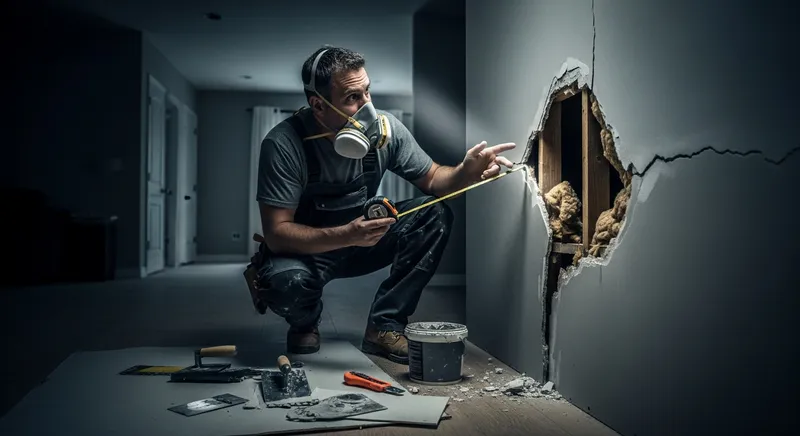
Quick Answer: Repair drywall when the damage is smaller than about 4 square feet, the board is dry and structurally sound, and the surrounding texture can be matched. Replace drywall when it has been soaked by water, is sagging or crumbling, has mold growth, or when damage covers most of a wall — at that point new board is cheaper and looks better than a quilt of patches. Repairs are priced by the size and complexity of the damage; replacement is priced by the square footage of board hung, taped, and textured.
When Is Drywall Repair the Right Choice?
Repair is the right choice whenever the damage is localized and the board around it is still solid. That covers the vast majority of what we see in Salt Lake and Davis County homes:
- Doorknob holes and furniture dings
- Nail pops and screw dimples
- Hairline settling cracks at corners and above doors
- Openings cut by plumbers and electricians
- Small dents and scrapes from moving day
A properly done patch — backed for rigidity, feathered wide, texture-matched, and primed — is permanent and invisible. It also costs a fraction of replacement. Our repairs and patching service handles these every week, and most are finished in one or two visits. For what affects repair pricing, see our drywall repair cost guide for Salt Lake City.
When Should Drywall Be Replaced Instead of Repaired?
Replace drywall when the board itself has failed — not just the surface. Drywall is gypsum wrapped in paper, and once the core is compromised no amount of joint compound will fix it. Replacement is the smart call when you see:
- Water saturation. Board that has been soaked swells, softens, and loses structural integrity. Even after it dries, it stays weak and often grows mold inside. Read our guide on whether water-damaged drywall can be saved.
- Sagging ceilings. Ceiling board that bows between joists has usually absorbed moisture or was hung with the wrong thickness. It will not flatten back out.
- Mold growth. Surface mildew can sometimes be cleaned, but mold rooted in the paper facing means the board comes out.
- Crumbling or chalky gypsum. Common in older homes with long-term moisture exposure.
- Widespread damage. If more than roughly a third of a wall needs patching, replacing the whole sheet is faster, cheaper for the area covered, and finishes flatter.
What Drives the Cost of Each Option?
Repairs are priced by the visit and complexity; replacement is priced by the square foot of board hung, taped, and textured. What moves the number:
- Size and number of repairs — a doorknob hole or a few nail pops is a small job; a water-damage cutout is a bigger one
- Texture to match — hand textures and smooth walls take more finishing time than orange peel
- Water damage — wet insulation, mold, or soft board widens the scope
- Wall or room size — for replacement, the square footage of new board
- Ceilings and access — overhead and high work takes longer
Bundling several repairs into one visit lowers the cost of each — something we do constantly for homeowners in Salt Lake City, Layton, and Ogden.
Is It Cheaper to Patch a Wall or Replace It?
For damage under a few square feet, patching is always cheaper. The math flips as damage spreads. A wall with six or eight separate patches needs so much taping, mudding, and texture blending that hanging a fresh sheet costs about the same and produces a flatter, cleaner result. During home remodels we often recommend replacing whole walls rather than chasing dozens of old repairs, especially when the wall will get new paint anyway.
Does Utah's Climate Affect the Repair-or-Replace Decision?
Yes, in two ways. First, Utah's dry air and big seasonal temperature swings make homes expand and contract, so settling cracks are common — but those are almost always repairable, not a replacement issue. Our post on why drywall cracks keep coming back explains how to fix them permanently. Second, spring snowmelt and summer monsoons cause the water intrusion that ruins board along foundations and ceilings, which is why basement walls are the most commonly replaced drywall in Northern Utah. If you're finishing or re-finishing a basement, see our basement finishing service and city pages like basement finishing in Layton.
How Do You Know If a Patch Will Be Invisible?
The make-or-break factor is texture matching. A patch that is structurally perfect will still catch your eye if the texture pattern or paint sheen doesn't blend. Skilled finishers hand-match orange peel, knockdown, and hand-troweled patterns so the repair disappears — we explain exactly how in our guide to how pros match drywall texture after repairs. If a contractor tells you a texture "can't be matched," get a second opinion before agreeing to replace an entire wall.
Get an Honest Repair-or-Replace Assessment
Drywall Techs gives free, written, line-item estimates across Northern Utah — and because we do both repairs and full drywall installation, we have no incentive to push you toward the more expensive option. We'll tell you plainly when a simple patch solves it and when replacement genuinely saves you money.
**Request a free estimate** or call (801) 791-9053.
Frequently Asked Questions
Should I repair or replace damaged drywall?
Repair when damage is smaller than about 4 square feet, dry, and structurally sound. Replace when board has been soaked, is sagging, moldy, crumbling, or when more than a third of the wall needs patching — at that point new board is cheaper and flatter.
How much does drywall repair cost compared to replacement in Utah?
Repairs are priced by the size and complexity of the damage and the texture to match. Replacement is priced by the square footage of board hung, taped, and textured, so it costs more for small damage but can beat heavy patchwork on a badly damaged wall. Call (801) 791-9053 or use the contact form for a free written estimate.
Can drywall that got wet be repaired instead of replaced?
Only if it dried quickly and stayed firm. Drywall that swelled, softened, sagged, or shows staining after a soaking should be cut out and replaced, because the gypsum core stays weak and can harbor mold even after it dries.
Is it worth patching a wall with many holes?
Usually not beyond six to eight patches. Heavy patchwork requires so much taping and texture blending that replacing the sheet costs about the same and produces a flatter, cleaner wall.
Will a drywall patch be visible after painting?
Not when done properly. A professional patch is backed for rigidity, feathered wide, texture-matched to the surrounding pattern, and primed before paint. On walls with strong side light, painting corner-to-corner hides any sheen difference.
Do settling cracks mean my drywall needs replacement?
No. Settling cracks are a taping issue, not a board failure. Re-taping the joint with proper tape and three compound coats fixes them permanently in most Utah homes.