Why Does Drywall Crack — and Why Do the Same Cracks Keep Coming Back?
Quick Answer: Most drywall cracks are caused by normal structural movement — new-home settling, seasonal wood expansion and contraction, and truss uplift — concentrated at weak points like door corners and ceiling joints. They keep coming back when they're filled with spackle instead of being properly re-taped. A permanent fix means re-taping the joint with paper or mesh tape and three coats of compound, then matching the texture.
Why Does Drywall Crack in the First Place?
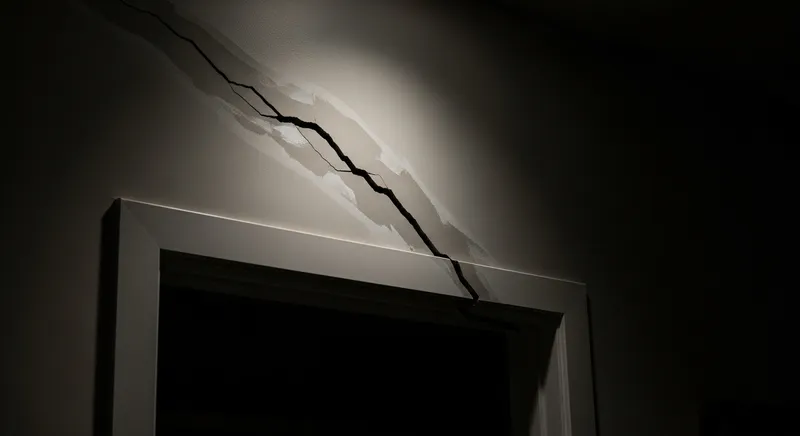
Drywall itself is rigid, but the wood framing behind it never stops moving. Lumber shrinks as it dries out during a home's first few years, foundations settle fractionally, and seasonal humidity swings make studs and joists expand and contract. All of that movement gets transferred to the drywall, and it releases at the weakest points — the joints between sheets and the corners of openings. That's why cracks so predictably radiate from the top corners of doors and windows and run along ceiling seams rather than appearing randomly mid-wall.
Why Do Cracks Keep Reappearing After I Fill Them?
Because filler isn't a repair — it's cosmetics. A crack at a joint means the tape that bridges the two sheets has failed or was never properly embedded. Spackle or caulk pressed into the crack has no tensile strength, so the next time the framing moves seasonally, the crack telegraphs right back through. The permanent fix is mechanical: rake out the crack, embed new paper or fiberglass mesh tape across the joint, and float three progressively wider coats of compound over it. The tape carries the movement; the crack stops reopening. This is standard work for our repair and patching crew.
Is Utah's Climate Especially Hard on Drywall?
Yes. Northern Utah combines very low humidity, 30–40 degree daily temperature swings, hot dry summers, and cold winters — a recipe for constant wood movement. New builds in fast-growing areas like Herriman, South Jordan, and Davis County's newer subdivisions go through a pronounced first-two-years settling period as kiln-dried lumber sheds its remaining moisture into our dry air. Hairline cracks appearing in a home's first couple of years are so normal here that most builders' warranties specifically address them.
What Is Truss Uplift and Why Does It Crack Ceilings?
Truss uplift is a winter phenomenon in truss-roofed homes — which is most Utah homes built since the 1970s. The bottom chord of the truss stays warm and dry buried in attic insulation while the upper chords sit in cold, humid attic air. The moisture differential makes the truss bow upward in winter, lifting the ceiling drywall away from interior walls and cracking the joint where wall meets ceiling. The telltale sign: a crack along the top of interior walls that opens in winter and closes in summer. The fix isn't more mud — it's floating the ceiling corner or installing crown molding fastened to the ceiling only, so the seasonal movement happens out of sight.
Which Drywall Cracks Are Serious?
Most aren't, but a few deserve attention beyond a cosmetic fix:
| Crack Type | What It Means |
|---|---|
| Hairline at door/window corners | Normal settling — cosmetic |
| Straight line along a seam | Failed tape joint — re-tape |
| Wall/ceiling joint, seasonal | Truss uplift — detail fix |
| Wider than 1/4 inch | Possible structural movement |
| Stair-step through a wall | Foundation movement — get it evaluated |
| Crack + sticking doors + sloped floor | Foundation — evaluate promptly |
The width test is the quick filter: hairline cracks are cosmetic, anything you can fit a coin into deserves a professional look. Diagonal stair-step cracking, especially in basements, can indicate foundation movement worth having evaluated before any drywall repair — otherwise you're patching a symptom.
How Do Pros Fix Cracks So They Stay Fixed?
- Open the crack. Rake it into a shallow V so compound can key in.
- Re-tape the joint. Paper or mesh tape embedded in setting-type compound across the full length.
- Three coats, feathered wide. Each coat wider than the last, sanded between.
- Match the texture. Orange peel, knockdown, or hand texture blended into the surrounding wall — the process in our texture matching guide.
- Prime and paint. So sheen is uniform and the repair vanishes.
The cost of a crack repair depends mainly on the length and number of cracks, ceiling height, and the texture to match; more on what drives repair pricing is in our drywall repair cost guide. If a wall has cracked and been patched so many times it's more mud than board, our repair vs. replacement guide covers when to reset with new drywall instead.
Crack Repairs That Disappear, Anywhere in Northern Utah
Drywall Techs re-tapes and refinishes cracked walls and ceilings across Salt Lake City, Sandy, Ogden, and all of Salt Lake, Davis, and Weber counties — and because we hand-match texture, the fix doesn't leave a scar. **Get a free estimate** or call (801) 791-9053.
Frequently Asked Questions
Why does my drywall keep cracking in the same place?
Because the crack is at a joint where the tape has failed, and filler alone has no strength. Seasonal framing movement reopens it. The permanent fix is re-taping the joint with paper or mesh tape and three feathered coats of compound.
Are drywall cracks in a new Utah home normal?
Yes. New homes settle for their first one to two years as kiln-dried lumber sheds moisture into Utah's dry air. Hairline cracks at door and window corners and along seams are common and cosmetic — most builder warranties address them.
What is truss uplift?
A winter phenomenon where roof trusses bow upward due to moisture differences between attic-insulated and exposed chords, lifting ceiling drywall and cracking the wall-ceiling joint. The crack opens in winter and closes in summer. The fix is a floating corner detail, not more mud.
When is a drywall crack a sign of a serious problem?
Watch for cracks wider than 1/4 inch, diagonal stair-step cracking, or cracks paired with sticking doors and sloped floors — those can indicate foundation movement and deserve a professional evaluation before cosmetic repair.
How much does it cost to fix drywall cracks in Utah?
It depends on the length and number of cracks, whether they're on walls or ceilings, and the texture to match. A proper repair includes raking out the crack, re-taping, three compound coats, texture matching, and priming. Bundling several cracks into one visit lowers the per-repair cost. Call (801) 791-9053 or use the contact form for a free written estimate.
Can I just caulk a drywall crack?
Caulk flexes, so it can temporarily mask a moving crack, but it leaves a visible ridged line and eventually splits or peels. Re-taping the joint is the only fix that restores strength and finishes invisibly.