Why You Need Green Board in Your Bathroom
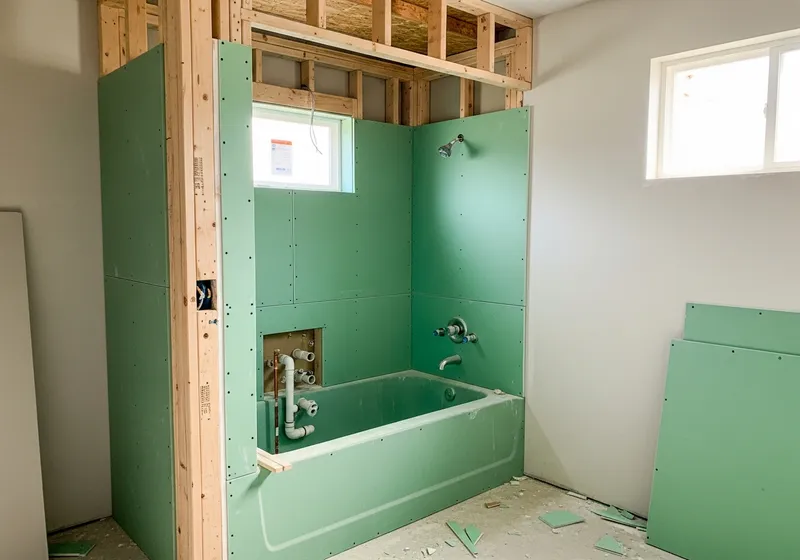
Standard drywall and water do not get along. In a bathroom, laundry room, or basement, ordinary white board absorbs humidity, swells, softens, and becomes a breeding ground for mold. That's why building codes and experienced contractors call for moisture-resistant drywall — commonly known as green board — in wet and high-humidity areas. This guide explains what green board is, where you actually need it, how it differs from mold-resistant and cement board, and why the right material choice matters in Utah homes.
What Is Green Board?
Green board is a moisture-resistant gypsum drywall with a green-tinted paper facing and a core treated to resist water absorption. The green paper is coated with a wax-based, water-repellent treatment that slows how quickly moisture penetrates the board. It handles humidity and occasional splashes far better than standard drywall — but it is water-resistant, not waterproof. It should never be used where it will be in direct, continuous contact with water, like inside a shower pan.
| Board Type | Color | Best Use |
|---|---|---|
| Standard | White/gray | Dry interior walls and ceilings |
| Moisture-resistant (green) | Green | Bathrooms, laundry, kitchens, basements |
| Mold-resistant | Purple | High-humidity + mold-prone areas |
| Cement board | Gray | Direct-water zones: shower & tub surrounds |
Why Standard Drywall Fails in Wet Areas
Regular drywall has a gypsum core wrapped in untreated paper. Paper is organic — it's essentially food for mold. When it absorbs moisture from steam, splashes, or high humidity, three things happen:
- Swelling and softening. The gypsum core loses integrity, the surface bulges, and fasteners lose their grip.
- Mold and mildew growth. Mold colonizes the damp paper, causing stains, odors, and potential health concerns.
- Structural failure. Over time the board crumbles, tape lifts, and the wall has to be torn out and replaced.
By the time you see the damage on the surface, moisture has often spread behind the wall. That's why prevention with the right material is far cheaper than replacement later. If you already have water damage, see our guide on repairing vs. replacing water-damaged drywall.
Where You Should Use Green Board
Moisture-resistant drywall belongs anywhere humidity is regularly elevated but the surface won't be directly soaked:
- Bathrooms — walls and ceilings outside the shower/tub enclosure
- Laundry rooms — humidity from washers and dryers
- Kitchens — around sinks, dishwashers, and cooking areas
- Basements — below-grade spaces prone to humidity and Utah's freeze-thaw moisture cycles
- Utility and mechanical rooms — near water heaters and HVAC equipment
In Utah's climate, basements are a particular concern. Below-grade walls can wick moisture, and seasonal temperature swings drive condensation. Using green board (and proper vapor barriers) in a basement finishing project is a smart, code-conscious upgrade.
Where Green Board Is NOT Enough
Here's the mistake that leads to failed showers: using green board *inside* a shower or tub surround. Green board resists humidity, but it cannot handle standing water or direct spray. For those zones you need a proper tile backer:
- Cement board (like Durock or HardieBacker) for tiled shower and tub walls
- Foam or membrane backer systems for waterproof, tile-ready surfaces
Tiling directly over green board in a shower is a common DIY error that leads to rot behind the tile within a few years. The tile hides the damage until it's severe.
Green Board vs. Mold-Resistant (Purple) Board
Beyond green board, there's mold-resistant drywall — often faced with purple paper or made with a fiberglass mat instead of paper. Because there's no organic paper for mold to feed on, it resists mold growth even better than green board. It's the top choice for bathrooms in humid climates, spa-style baths, and anywhere with a history of mold. It costs a bit more than green board but less than a mold remediation.
What It Costs
Moisture-resistant drywall costs modestly more than standard board — a small premium for the protection it provides. Given that a single moisture failure can mean tearing out walls, replacing insulation, and remediating mold, spending a little more up front is one of the easiest decisions in a bathroom or basement project. For a look at what else affects a drywall quote, see our drywall installation cost guide.
The Bottom Line
Use green board in bathrooms, laundry rooms, kitchens, and basements where humidity is high. Step up to purple mold-resistant board in the most moisture-prone or mold-prone spots. And always use cement board or a waterproof backer inside showers and tub surrounds — never green board alone. Getting the material right the first time protects your home, your air quality, and your budget.
Planning a bathroom or basement project? Our team specs the correct moisture-resistant materials for every zone as part of our drywall services. Request a free estimate and we'll make sure your wet areas are built to last in Utah's climate.