What is a Level 5 Drywall Finish?
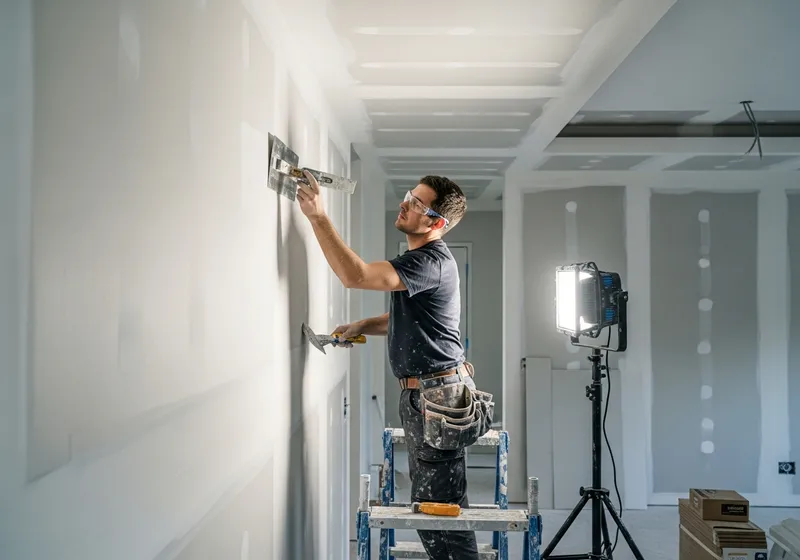
A Level 5 drywall finish is the highest standard in the industry — a fully skim-coated wall that shows no seams, no fastener shadows, and no texture variation under any light. If you're building a modern home with large windows, planning to use satin or semi-gloss paint, or you simply want walls that look flawless, understanding the drywall finish levels helps you spec the job correctly and budget for it up front.
The Six Drywall Finish Levels
The drywall finishing scale runs from Level 0 to Level 5, defined by the Gypsum Association. Each level adds another stage of taping, coating, and sanding:
| Level | What's Done | Typical Use |
|---|---|---|
| Level 0 | Board hung, no taping | Temporary or pre-demo construction |
| Level 1 | Tape embedded in joint compound | Above ceilings, attics, plenum spaces |
| Level 2 | One coat over tape and fasteners | Garages, warehouses, tile substrate |
| Level 3 | Two coats, medium/heavy texture | Walls getting knockdown or orange peel |
| Level 4 | Three coats, smooth-sanded | Standard for flat and matte paint |
| Level 5 | Full skim coat over entire surface | Gloss paint, critical lighting, high-end |
Most residential walls in Utah are finished to Level 4: joints and screws get three coats of compound, sanded smooth, ready for a flat or matte paint. Level 4 looks great — until you add raking light or a sheen. That's where Level 5 comes in.
What Actually Happens in a Level 5 Finish
The difference between Level 4 and Level 5 is one critical step: a skim coat applied across 100% of the wall, not just over the seams and screws.
- Standard Level 4 taping first. Joints are taped and coated three times, fasteners are covered, corner bead is set, and everything is sanded flat.
- Full-surface skim coat. A thin, uniform layer of joint compound (or a specialized high-build primer) is troweled or sprayed and squeegeed over the entire wall and ceiling.
- Final sand. The skimmed surface is sanded to a dead-flat, uniform texture so the paper face of the board and the compound over the joints reflect light identically.
The goal is to eliminate a problem called joint banding or photographing — where the compound over seams absorbs and reflects paint differently than the bare drywall paper next to it. In flat paint you'll never notice. Under a gloss finish or sunlight streaming across the wall, those bands stand out like a roadmap.
When You Actually Need Level 5
A Level 5 finish is worth the extra cost in these situations:
- Critical lighting. Big windows, sliding glass doors, or wall-washing light fixtures create raking light that exposes every imperfection.
- Glossy or reflective paint. Satin, semi-gloss, and high-gloss paints amplify surface flaws. Flat and matte paints hide them.
- Dark or saturated colors. Deep colors show texture differences far more than light neutrals.
- High-end and modern builds. Clean, minimalist interiors with smooth walls have no texture to hide behind.
If your walls will get a standard flat or eggshell paint in a room with normal lighting, Level 4 is perfectly adequate — paying for Level 5 there is money you don't need to spend. An honest contractor will tell you when you don't need the upgrade.
Level 5 vs. Smooth Texture — They're Not the Same
Homeowners often confuse "smooth walls" with a Level 5 finish. A smooth wall simply means no sprayed texture. You can have a smooth Level 4 wall (skimmed only at the joints) or a smooth Level 5 wall (skimmed everywhere). The Level 5 skim coat is what guarantees the surface reads as truly uniform under demanding light. For a broader look at wall texture options, see our drywall texture types guide.
What Affects the Cost of Level 5
A Level 5 finish costs more than Level 4 because of the extra material and the labor-intensive full-surface skim and sand. How much more depends on the square footage being skimmed, ceiling height and access, how many rooms get the upgrade, and whether the skim is troweled by hand or sprayed. For a look at everything else that drives a drywall quote, see our drywall installation cost guide, or call (801) 791-9053 or use the contact form for a free written estimate.
Getting a Level 5 Result That Lasts
A great Level 5 finish depends almost entirely on the finisher's skill and the prep. Rushed sanding, poor lighting during application, or skipping a proper primer will show through even a technically "Level 5" wall. Our team uses work lights during finishing to catch flaws before paint goes on, and we prime with a quality high-build primer that further evens out the surface.
If you're planning a modern remodel, new construction, or a room with dramatic windows, talk to us about whether Level 5 is right for your project. Explore our full drywall services or request a free written estimate — we'll walk the space, look at your lighting and paint plans, and recommend the finish level that actually fits your job instead of upselling you into one you don't need.