Basement Finishing Costs in Utah: What Drives the Price
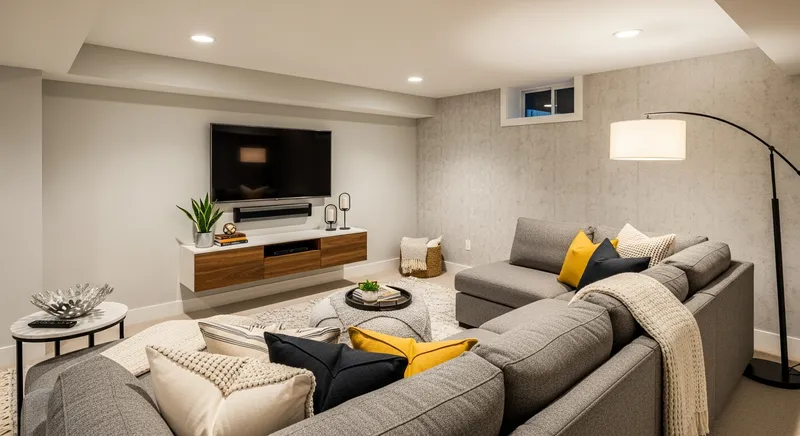
Thinking about finishing your Utah basement? You're making a smart investment. Finished basements add significant value to Utah homes and provide much-needed living space — a spare bedroom, a home theater, a play area, or even a rentable accessory apartment. In a market where building up or out is expensive, finishing the square footage you already have is one of the best dollar-for-dollar improvements you can make. Here's a complete, honest look at what drives the cost, plus permits and timeline.
What Determines Basement Finishing Cost in Utah
There's no single per-square-foot number that fits every basement. The biggest cost drivers are:
- Square footage — more floor, wall, and ceiling area means more framing, drywall, flooring, and paint.
- Finish level — a basic open family room costs far less than a space with a full bathroom, wet bar, and custom built-ins.
- Layout — every added wall, soffit, bulkhead, and angle adds framing and drywall labor. Open plans are the most economical.
- Plumbing and bathrooms — a bathroom rough-in is one of the largest single line items, especially if drains have to be cut into the slab.
- Electrical and lighting — the number of circuits, outlets, and recessed lights adds up.
- Egress windows — any basement bedroom needs one, and cutting the foundation and installing a window well is significant work.
- Moisture and radon — waterproofing or a mitigation system, if needed, comes before any finishing.
- Flooring and finishes — carpet and vinyl plank cost less than tile or hardwood; trim, doors, and fixtures vary widely.
If you only need the drywall portion — hanging, taping, texturing, and finishing the walls and ceiling over framing that's already in place — the cost depends mainly on square footage, ceiling height, the number of soffits and corners, the board type (moisture- or mold-resistant in humid areas), and the finish level.
What's Included at Each Level?
*Basic Finish:*
- Framing and drywall
- Basic electrical and lighting
- Simple flooring (vinyl or carpet)
- One bathroom rough-in
*Mid-Range Finish:*
- Everything above, plus
- Full bathroom
- Quality flooring options
- Recessed lighting
- Egress window
*High-End Finish:*
- Everything above, plus
- Wet bar or kitchenette
- Home theater setup
- Custom built-ins
- Premium finishes throughout
Utah-Specific Considerations
- Egress Windows Required - Utah building code requires egress windows in basement bedrooms. The cost depends on how much foundation has to be cut, the window size, and the window well.
- Permits - Salt Lake County and most Utah cities require permits for basement finishes. Permit fees vary by city and project scope — check with your local building department.
- Radon Mitigation - Many Utah basements have elevated radon levels. Test before you finish; if levels are high, install a mitigation system before the walls close up.
- Moisture Control - Utah's clay soil can cause moisture issues. Waterproofing may be needed, and the scope depends on where and how much water is getting in.
Timeline for Basement Finishing
- Basic finish: 4-6 weeks
- Mid-range: 6-10 weeks
- High-end: 10-16 weeks
The Basement Finishing Process, Step by Step
Understanding the sequence helps you plan and avoid surprises. A typical Utah basement finish follows this order: 1) design and permitting; 2) framing the walls and any soffits; 3) rough-in for electrical, plumbing, and HVAC; 4) inspection of the rough-ins; 5) insulation; 6) drywall hanging, taping, texturing, and a final inspection-ready finish; 7) painting; 8) flooring, trim, doors, and fixtures; and 9) final inspection. The drywall phase is where the space starts to feel like a real room, and it's where finish quality matters most — uneven seams or a mismatched texture will stand out under basement lighting.
Why the Drywall Step Matters in a Basement
Basements present unique drywall challenges: lower ceilings, soffits hiding ductwork and plumbing, and concrete walls that need furring or framing first. Corners, bulkheads, and around-the-window returns all take extra care to finish cleanly. We also recommend moisture-resistant drywall in any area prone to humidity, and we tape and finish to a consistent Level 4 (or Level 5 where lighting is unforgiving) so the walls look like the rest of your home, not an afterthought.
ROI on Basement Finishing in Utah
A finished basement adds usable square footage, which buyers in markets like Salt Lake City and Park City value. Beyond resale value, a finished basement is often the cheapest way to add a bedroom, a home office, or a separate living space for family — and in many Utah cities, a code-compliant basement apartment with proper egress can generate rental income.
Money-Saving Tips
- Get multiple quotes (at least 3) and compare them line by line, not just the bottom number
- Do demolition or cleanup yourself if comfortable
- Choose standard ceiling heights and avoid moving plumbing where possible
- Skip the wet bar or premium finishes if budget is tight — you can add them later
- Phase the project: finish the drywall and main living area first, then add a bathroom or bedroom in a later phase
- Keep the layout simple — fewer walls, soffits, and angles mean less framing and drywall labor
Free Basement Consultation
Drywall Techs specializes in basement finishes throughout Salt Lake City, Sandy, Draper, South Jordan, and Northern Utah. We handle everything from framing to final paint, and we're happy to do just the drywall portion if you're managing the rest of the project yourself. See our basement finishing service page for details. Call (801) 791-9053 or use the contact form for a free written estimate.
Frequently Asked Questions
How much does it cost to finish a basement in Utah?
It depends on the square footage, finish level, layout, whether you add a bathroom or bedroom (and the egress window that requires), electrical and lighting, flooring, and any moisture or radon work. A drywall-only job over existing framing depends mainly on square footage, ceiling height, and soffits. Call (801) 791-9053 or use the contact form for a free written estimate.
Do I need a permit to finish my basement in Utah?
Yes. Salt Lake County and most Utah cities require permits for basement finishes; fees vary by city and project scope. Permits ensure egress, electrical, and framing meet code — which matters for safety and for resale.
Are egress windows required in a finished Utah basement?
Yes, if the basement includes a bedroom. Utah building code requires a code-sized egress window in every basement bedroom for emergency escape. Installing one involves cutting the foundation, setting the window, and adding a window well.
How long does it take to finish a basement?
A basic finish usually takes 4-6 weeks, mid-range runs 6-10 weeks, and a high-end finish with a bathroom, wet bar, and custom work can take 10-16 weeks. The drywall phase alone is typically a few days to about a week depending on size.
Should I worry about moisture or radon in a Utah basement?
Both are common in Utah. Clay-heavy soil can cause moisture intrusion, so waterproofing may be needed before finishing, and we recommend moisture-resistant drywall in humid areas. Radon is also widespread, so test before finishing and install a mitigation system if levels are high.
Can you just do the drywall part of my basement?
Yes. Many homeowners frame and rough-in themselves or hire separate trades, then bring us in to hang, tape, texture, and finish the drywall to a clean, paint-ready Level 4 or Level 5. We're happy to handle just that phase.